
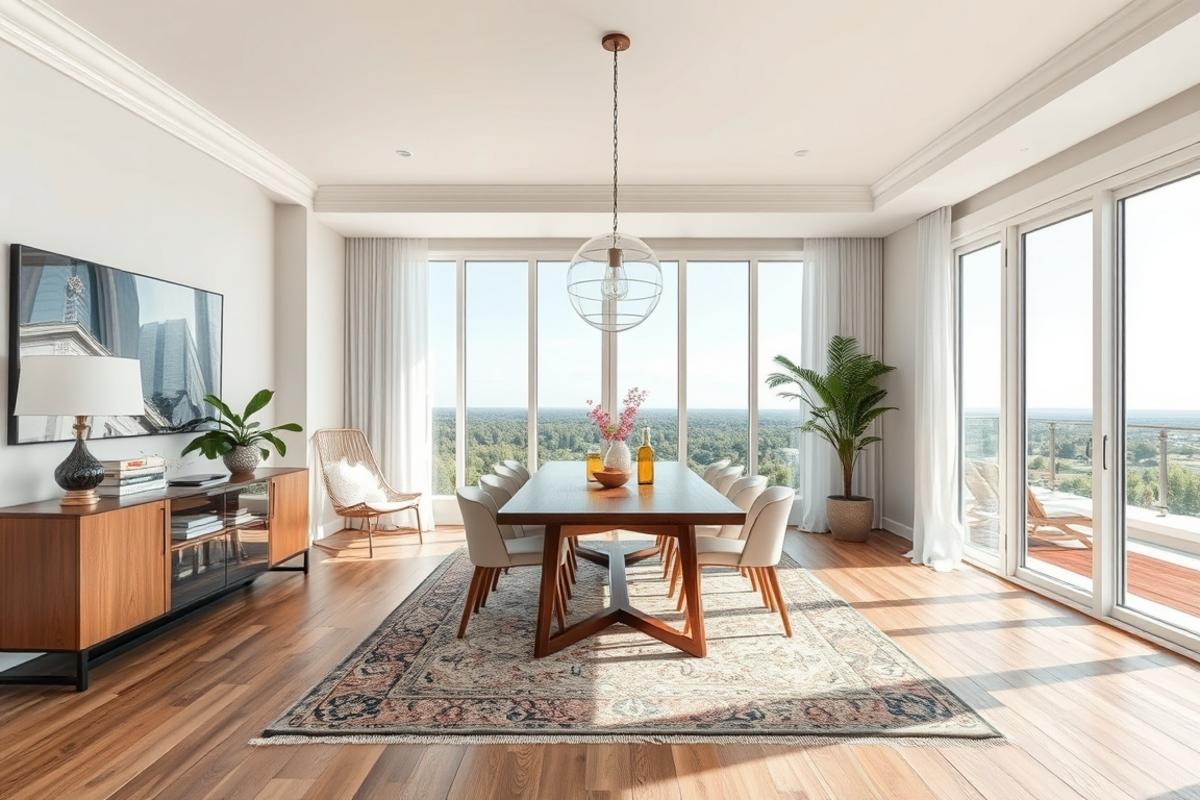
The right rug can completely transform your dining space. It grounds the table, adds warmth, and ties the whole room together. But choosing the wrong one? That can throw off your entire design.
If you’ve been searching for fresh dining room rug ideas, you’re in the right place. And if you’re wondering how to choose the perfect area rug for dining room spaces, we’ve got practical answers. From size and shape to texture and color, this guide covers everything you need to style your dining room with confidence.
Key Design Elements and Materials
The foundation of any great dining room starts with the right materials. Rugs are no exception. The material you choose affects how the rug looks, feels, and holds up over time.
Natural fibers like wool, jute, and sisal are popular choices. Wool is soft, durable, and resists stains well. Jute and sisal bring in organic texture. They work beautifully in farmhouse or coastal-inspired dining rooms.
Synthetic fibers like polypropylene are also worth considering. They’re budget-friendly and surprisingly easy to clean. That makes them a smart choice for families with kids or pets.
Here are the key elements to think about:
- Size: The rug should extend at least 24 inches beyond each side of the table.
- Shape: Match the rug shape to your table. Round tables look great on round rugs. Rectangular tables need rectangular rugs.
- Texture: Low-pile rugs work best under dining tables. Chair legs don’t snag or wobble on flat surfaces.
- Pattern: Subtle patterns hide crumbs and spills between cleanings. Bold patterns make a strong style statement.
- Color: Darker rugs are more forgiving. Lighter rugs open up the space visually.
For smaller apartments or condos, consider a thinner flatweave rug. It creates the layered look without making the space feel heavy or cramped.
Color Palette and Lighting Strategy
Color sets the mood of your dining room. It’s one of the most powerful tools in your design toolkit.
Warm tones like terracotta, rust, and ochre create an inviting, cozy atmosphere. They work especially well in traditional or bohemian dining rooms. Cool tones like slate blue, sage green, and soft gray bring a calm, modern energy.
Neutral rugs in beige, ivory, or greige are always a safe bet. They complement almost any wall color or furniture finish. And they give you flexibility to update your decor seasonally without replacing the rug.
Lighting plays a huge role in how your rug looks in the space.
Natural light makes colors appear brighter and more saturated. If your dining room gets a lot of sun, deeper rug colors can help balance the brightness. In north-facing rooms with limited natural light, lighter rug tones help reflect what light there is.
For artificial lighting, a warm-toned pendant light above the table will warm up cool-colored rugs. It creates a soft, flattering glow. If you have recessed lighting, try adding a dimmer. Being able to shift from bright task lighting to ambient dining light makes a real difference.
In apartments, where ceiling height and square footage are limited, a light-colored rug with a simple pattern makes the room feel larger. In houses with open-plan layouts, use the rug to define the dining zone visually.
Step by Step Interior Design Tips

Ready to style your dining room from scratch? Follow these steps for a polished, put-together look.
Step 1: Measure your dining table. Write down the length and width. Add at least 48 inches total to each dimension. This gives you the minimum rug size you need.
Step 2: Choose your shape. Rectangular is the most common. But don’t be afraid to go round if your table is round. It softens the space and feels unexpected in the best way.
Step 3: Pick your material based on your lifestyle. Do you have young children? Go for a low-pile synthetic. Are you child-free with a love for texture? A wool or cotton flatweave is gorgeous.
Step 4: Test your color choice in your actual lighting. Order samples or swatches before committing. Colors look very different in morning light versus evening light.
Step 5: Layer with intention. A rug alone is beautiful. But adding a texture contrast, like a woven jute rug under a smooth cotton one, elevates the look.
Step 6: Center the rug under the table. Make sure all chair legs land on the rug when pulled out. This is the number one rule for getting the layout right.
These dining room rug ideas work whether you’re starting fresh or refreshing an existing space. When you’re selecting the right area rug for dining room layouts, always prioritize function alongside style. A rug that looks great but trips up your chairs is not a winner.
And if you want to explore more dining room rug ideas beyond the basics, try experimenting with layering, unexpected colors, or oversized formats.
Style Variations and Decor Ideas
One of the best things about rug styling is how flexible it is. There’s no single right answer. Your dining room style should reflect your personality and how you actually live.
Modern and minimalist: Go for a solid-color rug in a muted tone. Think charcoal, warm white, or soft taupe. Keep patterns minimal or skip them entirely. Let the furniture be the focal point.
Bohemian and eclectic: Embrace pattern. A vintage-style Persian rug or a bold geometric print adds personality. Mix textures freely. Layer a smaller patterned rug over a natural fiber base rug for a layered boho look.
Farmhouse and rustic: Natural jute or sisal rugs are your best friend here. They bring warmth and organic texture. Pair with a farmhouse table in reclaimed wood for a cohesive look.
Scandinavian: Keep it simple and functional. A flat-weave cotton rug in black and white or soft pastels fits perfectly. Clean lines, minimal pattern, maximum calm.
Luxury and glam: Go for a plush, high-pile rug in a rich jewel tone. Deep emerald, sapphire blue, or burgundy feel expensive and opulent. Add metallic accents nearby to complete the look.
No matter your style, the principles of size, placement, and proportion still apply. Get those right, and you can pull off almost any aesthetic.
Common Decorating Mistakes to Avoid
Even experienced decorators make these mistakes. Knowing what to avoid saves you time, money, and frustration.
Mistake 1: Choosing a rug that’s too small. This is the most common error. A too-small rug makes the furniture look disconnected and awkward. Always go bigger than you think you need.
Mistake 2: Ignoring chair clearance. Pull your chairs all the way out. All four legs should still sit on the rug. If they don’t, the rug is too small or positioned incorrectly.
Mistake 3: Choosing high-pile rugs under dining tables. They look cozy, but chair legs sink in and wobble. They’re also much harder to clean after a dinner party. Stick to low-pile or flatweave options.
Mistake 4: Not considering the whole room’s color palette. A rug that clashes with your wall color or furniture finish creates visual chaos. Always consider the full picture.
Mistake 5: Skipping a rug pad. A rug pad prevents slipping, extends the life of your rug, and adds a little cushioning underfoot. It’s a small investment that makes a big difference.
Mistake 6: Playing it too safe. A dining room rug is a relatively easy thing to update. Don’t be afraid of color or pattern. Be bold. You can always change it later.
Maintenance and Long Term Style Tips
A beautiful rug deserves proper care. With the right habits, yours can look great for years.
Vacuum regularly. For low-pile rugs, once or twice a week is ideal. This prevents dirt and crumbs from settling into the fibers. Use a vacuum without a beater bar on delicate rugs.
Address spills immediately. Blot, don’t rub. Rubbing spreads the stain and damages fibers. Use a mild cleaning solution and work from the outside of the stain inward.
Rotate your rug every six to twelve months. This evens out wear and fading, especially in rooms with direct sunlight. It’s a simple step that extends the life of your rug significantly.
Use a rug pad. We mentioned it in mistakes to avoid, but it’s worth repeating here. A good rug pad also prevents the rug from bunching under chairs.
For seasonal refreshes, you don’t need to buy a new rug. Simply swap out your dining chairs’ cushions or change your table runner and centerpiece. A new color of napkins or placemats can completely update the vibe without spending much at all.
If your rug starts to look tired after a few years, consider professional cleaning before replacing it. A deep clean can revive colors and texture dramatically.
Shop the Look: Our Top Picks
As an Amazon Associate, ItsDecor earns from qualifying purchases.
Conclusion
Your dining room deserves a rug that works as hard as you do. The right rug defines the space, adds warmth, and reflects your personal style. It doesn’t have to be expensive or complicated to look amazing.
We hope these dining room rug ideas have given you the clarity and inspiration to make a confident choice. Whether you’re going bold and patterned or calm and neutral, the right area rug for dining room spaces can pull your entire room together beautifully.
Remember the key rules: size up, go low-pile, match your lifestyle, and don’t skip the rug pad. These small decisions add up to a big impact.
Ready to take your dining room to the next level? Explore more dining room rug ideas and related decor inspiration right here on ItsDecor.com. Your dream dining room is closer than you think.
FAQs
What size rug should I use under a dining table?
The general rule is to add at least 24 inches to each side of your table. So if your table is 36 by 72 inches, you’ll want a rug that’s at least 84 by 120 inches. This ensures chair legs stay on the rug even when pulled out.
What shape rug works best in a dining room?
Match the rug shape to your table shape. Rectangular tables pair best with rectangular rugs. Round tables look great on round or square rugs. An oval rug can also work beautifully under an oval dining table.
Is a patterned or solid rug better for a dining room?
Both work well depending on your style. Patterned rugs hide crumbs and stains more effectively between cleanings. Solid rugs create a cleaner, more modern look. Choose based on how busy your dining area gets and what matches your existing decor.
What material is easiest to clean under a dining table?
Low-pile synthetic rugs made from polypropylene are the easiest to clean. They resist stains and hold up well to heavy use. Flatweave cotton rugs are also a great option. Many are even machine washable, which is a huge bonus for dining spaces.
Do I need a rug pad under my dining room rug?
Yes, absolutely. A rug pad prevents slipping on hard floors, protects your flooring from scratches, and adds a small amount of cushioning underfoot. It also keeps the rug from bunching or shifting when chairs are pushed in and out. It’s a small investment with lasting benefits.