
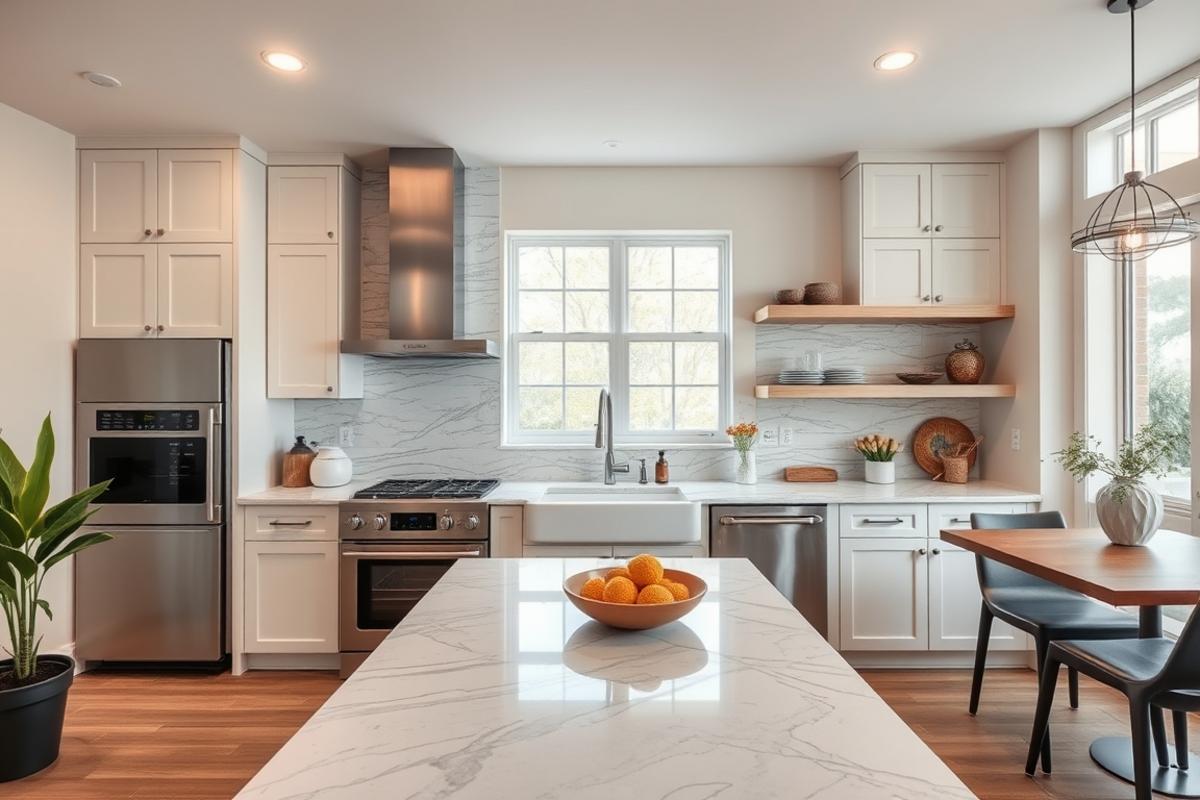
Your kitchen walls have more power than you think. The right backsplash can completely transform the look and feel of your entire kitchen. If you’ve been scrolling through design inspiration lately, you already know that kitchen backsplash trends are moving fast right now. Homeowners across the US are ditching the old plain subway tile and going bold. And if you want your kitchen to feel fresh and current, understanding the latest kitchen tile trends is a great place to start.
This guide covers everything you need. From materials and colors to styling mistakes and maintenance tips, you’ll walk away with a clear plan for your kitchen refresh.
Key Design Elements and Materials
The backsplash is no longer just a practical surface. It’s a design statement. And the materials you choose will set the entire tone of your kitchen’s personality.
Natural stone is having a major moment. Marble, quartzite, and slate all bring texture, depth, and a sense of luxury to the space. They work beautifully in both traditional and contemporary kitchens. The variation in each slab means no two kitchens will ever look exactly the same.
Ceramic and porcelain tiles remain popular for good reason. They’re durable, easy to clean, and available at every price point. You can find high-end handmade looks at budget-friendly prices. That flexibility makes them a smart choice for apartments and starter homes alike.
Zellige tile, the handcrafted Moroccan clay tile, is one of the most talked-about materials in kitchen design right now. Its irregular surface catches light beautifully. It adds warmth and artisanal charm to modern kitchens. And it looks equally stunning in small galley kitchens and large open-concept spaces.
For budget-conscious homeowners, peel-and-stick backsplash panels have improved dramatically in quality. They’re renter-friendly and easy to swap out as trends evolve. Just make sure the surface prep is done properly for the best result.
Color Palette and Lighting Strategy
Color does more than decorate. It shapes how you feel in a room and how large or small the space appears. Getting your palette right is one of the most important decisions in any kitchen design.
Warm earthy tones are dominating kitchens right now. Think terracotta, warm beige, sage green, and soft clay. These colors create a grounded, welcoming atmosphere. They pair beautifully with wood cabinetry and brushed brass hardware.
Cool tones are making a comeback too. Soft gray-blues, dusty mauves, and deep navy backsplashes add sophistication. They work especially well in kitchens with white or light gray cabinetry. The contrast gives the space a polished, editorial feel.
Lighting strategy is just as important as tile color. Natural light brings out the true beauty of textured and glossy tiles. If your kitchen has limited natural light, warm-toned under-cabinet lighting can compensate beautifully. It adds depth and makes the backsplash shimmer in the evenings.
For apartments with small kitchens, lighter-colored tiles with a glossy finish will reflect light and make the space feel bigger. In a larger house kitchen, you can afford to go darker and more dramatic. A deep charcoal or forest green backsplash in a spacious kitchen looks absolutely stunning.
Step by Step Interior Design Tips
Ready to actually pull this together? Here’s how to approach your kitchen backsplash project step by step, from concept to completion.
Step 1: Define your overall kitchen style first. Are you going for modern farmhouse, sleek contemporary, warm Mediterranean, or classic American? Your style choice will guide every other decision. Don’t pick a tile before you know your direction.
Step 2: Set your budget before you shop. Natural stone and handmade tiles are beautiful but pricey. Porcelain and ceramic alternatives can give you a similar look for a fraction of the cost. Knowing your ceiling early saves a lot of heartache later.
Step 3: Consider the scale of the tile relative to your kitchen size. Large-format tiles, such as 12×24 slabs, work well in bigger kitchens. Smaller mosaic or zellige tiles suit compact spaces with more visual texture. Mixing tile scales in one kitchen can look cluttered, so keep it intentional.
Step 4: Order samples and live with them. Tape your tile samples to the actual wall. Look at them at different times of day and under your kitchen lighting. Colors shift dramatically between morning sunlight and evening artificial light. This step saves costly mistakes.
Step 5: Plan your grout color carefully. Grout is not an afterthought. A matching grout gives a seamless, modern feel. A contrasting grout highlights the tile pattern and adds definition. This single decision can completely change the finished look.
Following these steps will help you navigate the evolving world of kitchen backsplash trends with confidence. And keeping an eye on current kitchen tile trends during your research phase will help you make choices that feel fresh, not dated.
Style Variations and Decor Ideas
One of the best things about backsplash design is how adaptable it is. The same concept can look totally different depending on the style you’re chasing. Let’s break down a few popular directions.
Modern Minimalist: Go for large-format porcelain slabs in a single neutral tone. Keep grout minimal and matching. Skip decorative borders. The result is clean, calm, and endlessly sophisticated.
Warm Farmhouse: Handmade ceramic tiles in off-white or cream with a slightly uneven surface bring that cozy, lived-in charm. Pair with open wood shelving and matte black hardware for a look that’s both current and timeless.
Luxury Statement: Book-matched marble or dramatic veined stone slabs running all the way to the ceiling make a jaw-dropping impact. This works best in kitchens with simple, understated cabinetry so the stone can be the star.
Mediterranean Inspired: Patterned encaustic cement tiles or hand-painted ceramic tiles bring color and personality. Think cobalt blue, warm terracotta, and rich ochre. This style works especially well in open kitchens that flow into dining spaces.
Scandinavian Calm: Matte white or soft gray tiles with clean lines and a honed finish. Pair with light wood accents and minimalist hardware. It’s effortless, airy, and always looks put together.
Common Decorating Mistakes to Avoid
Even well-intentioned kitchen renovations can go sideways. Here are the most common backsplash mistakes and how to avoid them.
Choosing tile based on the showroom, not your actual kitchen. Tiles look different under showroom lighting than they do in your home. Always bring home samples and test them in context before committing.
Ignoring the existing elements. Your backsplash needs to work with your cabinets, countertops, and flooring, not just look good on its own. Hold your tile sample next to your countertop material before deciding. Clashing undertones are the most common and most avoidable mistake.
Choosing too trendy without considering longevity. It’s smart to be inspired by current kitchen backsplash trends. But a highly specific trend that feels very “of the moment” might feel dated in three years. Balance trend-forward choices with timeless design principles.
Skimping on installation. A beautiful tile installed poorly will look terrible. Uneven grout lines, lippage between tiles, or incorrect spacing will ruin the final result. Always hire a skilled installer or follow detailed DIY guides if you’re doing it yourself.
Forgetting about maintenance requirements. Natural stone requires sealing. Matte tiles show water spots more easily. Handmade tiles may have grout absorption issues. Know what you’re signing up for before you fall in love with a material.
Maintenance and Long Term Style Tips
A great backsplash is an investment. Taking care of it properly keeps it looking beautiful for years. And knowing how to refresh it on a budget means you won’t feel stuck when your style evolves.
Seal natural stone backsplashes at least once a year. Use a high-quality penetrating sealer to protect against grease, moisture, and staining. This is especially important around the stove area where splatter is most frequent.
Clean tile backsplashes weekly with a mild, pH-neutral cleaner. Avoid abrasive scrubbers on glossy or handmade tiles. For grout, a soft brush and a baking soda paste work wonders on mild staining. Deep-clean grout twice a year to keep it looking crisp.
If you ever want to freshen the look without retiling, grout paint is a surprisingly effective solution. It can change light grout to dark or vice versa. It’s a budget-friendly way to update the feel of your backsplash without any demolition.
For a seasonal refresh, changing the accessories around your backsplash makes a big difference. Swap out the dish rack, update the hand soap dispenser, or add a new piece of art nearby. Small changes in the surrounding space can make your backsplash feel new again.
Conclusion
Your kitchen backsplash is one of the most impactful design choices in your entire home. It ties together your cabinets, countertops, and overall kitchen personality into one cohesive story. Staying informed about kitchen backsplash trends helps you make choices that feel current, personal, and lasting. And following the best kitchen tile trends means you’ll never be short on beautiful inspiration.
Use the tips in this guide to plan your project with confidence. Take your time, test your samples, and don’t rush the decision. The right backsplash will make you fall in love with your kitchen all over again. Explore more decor ideas and room-by-room design guides right here on ItsDecor.com to keep your home looking its very best.
FAQs
What is the most popular backsplash style in US kitchens right now?
Zellige tile, large-format stone slabs, and textured ceramic tiles are among the most popular choices right now. Warm earthy tones and handmade finishes are especially trending in American homes and condos.
How much does a kitchen backsplash installation typically cost?
Costs vary widely depending on material and labor. Basic ceramic tile installations can start around $10 to $15 per square foot installed. Natural stone or specialty handmade tiles can run $30 to $60 per square foot or more. Always get multiple quotes.
Can I install a backsplash myself as a DIY project?
Yes, many homeowners successfully install backsplash tiles themselves. Peel-and-stick panels are the easiest option for beginners. For grouted tile installations, you’ll need basic tiling tools and patience. Proper surface prep and careful grout work are the keys to a professional-looking result.
How do I choose a backsplash that won’t look dated in five years?
Choose materials and colors that are rooted in timeless design principles. Natural stone, classic ceramics in neutral tones, and simple geometric patterns age gracefully. You can incorporate current kitchen backsplash trends through accent areas rather than committing your entire wall to something very trend-specific.
What grout color works best with white or light-colored tiles?
It depends on the look you want. A matching white or light gray grout creates a seamless, modern feel. A darker contrasting grout, such as charcoal or warm gray, highlights the tile shape and adds visual definition. Both are stylish choices. Your cabinet color and overall kitchen palette should guide the decision.